
 Dogs
Dogs Cats
Cats Birds
Birds Horses
 On the Land
 In the Sea
If you’ve ever called your dog over, only to watch him sit with his back to you like a tiny furry philosopher, you’re not alone. I’ve lived with dogs through puppyhood, arthritis, picky eating phases, thunderstorm seasons, and the wonderfully odd habits that seem to appear out of nowhere in their later years. One behavior that worries a lot of devoted owners is when a dog settles down facing away, especially when he usually wants to be close.
The good news is that this posture often means something far less dramatic than rejection. In many cases, it’s about comfort, trust, habit, or how your dog is reading the room. Here are 8 surprising reasons your dog may be sitting facing away from you, along with what I’d watch for at home if the behavior suddenly becomes frequent or seems out of character.
1. He feels safest when he can watch the room
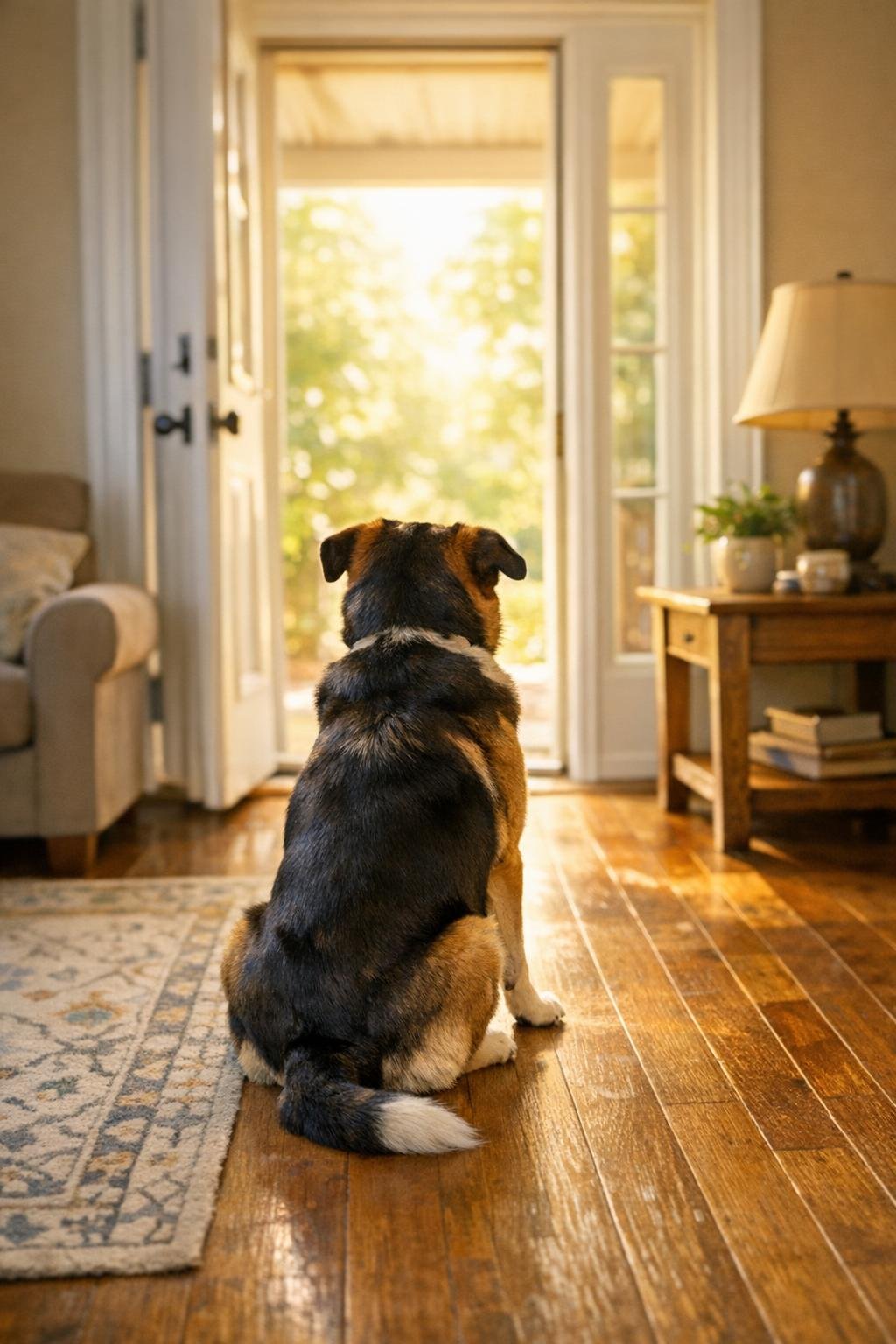
Dogs are natural observers, and many prefer to position themselves where they can monitor doors, hallways, windows, or the main path through the house. If your dog sits 3 to 6 feet in front of you but faces the entryway or living room instead, he may simply be taking the “lookout” role. I see this often in dogs who like routine; they’ll park themselves near the sofa yet keep their attention on the front door, the kitchen, or the staircase.
This can be especially common in older dogs who’ve grown more selective about where they settle. They may want your company without giving up a clear view of the environment. If his ears perk when the elevator dings, the mail slot rattles, or someone walks down the hall, that back-facing sit is probably more about surveillance than snubbing.
2. He’s showing trust, not disrespect
To us, turning your back can feel rude. To a relaxed dog, it can mean exactly the opposite. When a dog sits with his back to you and stays loose through the shoulders, keeps his tail neutral, and remains settled for 10 or 15 minutes, he may be saying, “I know you’re here, and I don’t need to stay on alert.” That’s a real sign of comfort.
I’ve had dogs do this while leaning lightly against my shin or resting just close enough that their tail brushes my slipper. They weren’t disengaging; they were settling into companionship. If your dog chooses that position repeatedly in calm moments—after dinner, during television time, or while you read in your chair—it often reflects a quiet kind of confidence in your presence.
3. He may be protecting a sore spot
For senior dogs especially, body position can be about pain management. If your dog has stiffness in the hips, lower back, neck, or shoulders, he may choose to sit facing away because turning his head up toward you feels uncomfortable. Even a small twist repeated several times a day can matter in an older body.
Watch the details: does he hesitate before sitting, circle twice, shift weight off one side, or resist being touched near the spine or hindquarters? If he used to face you and now consistently turns away, I’d pay attention. Arthritis, muscle soreness, or reduced mobility often shows up first in subtle postural choices, sometimes weeks before a limp becomes obvious.
4. He’s avoiding too much eye contact
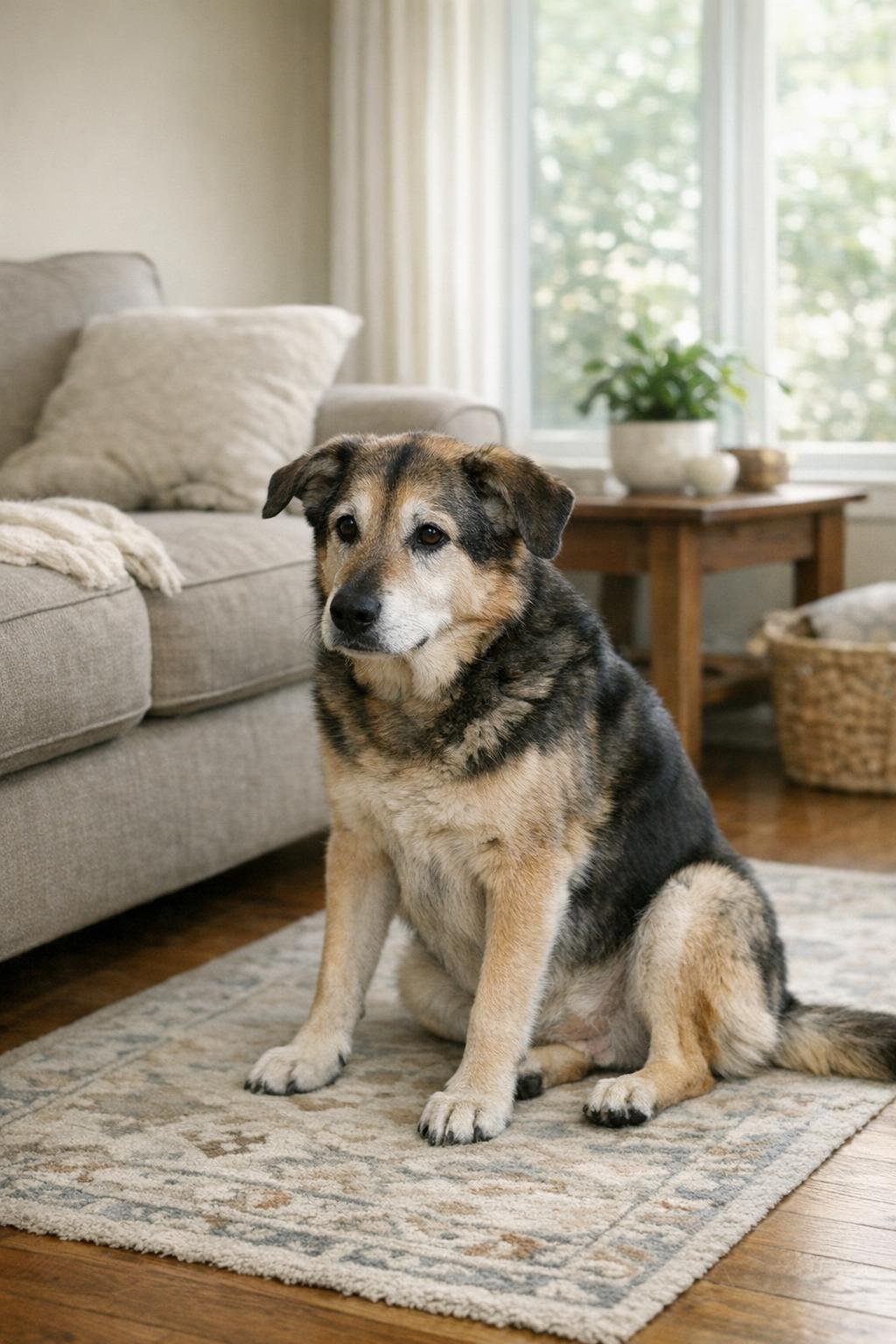
Some dogs turn away when direct attention feels intense. This is especially true if someone is leaning over them, speaking loudly, patting the top of the head, or repeatedly asking for eye contact. Facing away can be a calming gesture—a polite way for a dog to lower social pressure without leaving the room.
I notice this most with sensitive dogs and with older dogs whose tolerance has changed over time. A dog may still want to be near you but feel more comfortable if he can sit at a slight angle or with his back turned. If he relaxes when you soften your voice, turn your body sideways, or give him an extra 2 or 3 feet of space, that’s a useful clue.
5. He’s following a habit that has been rewarded
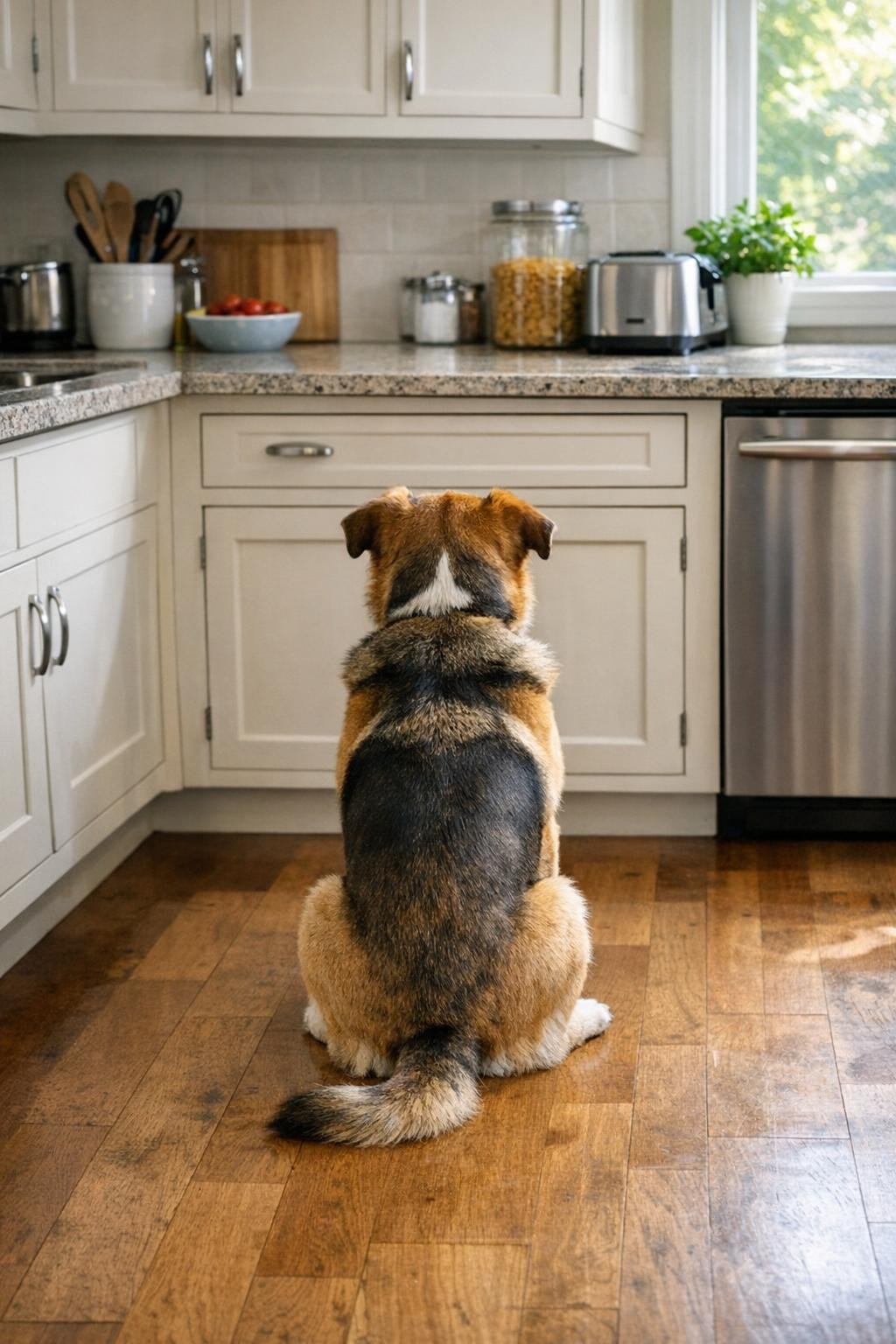
Dogs repeat what works. If your dog once sat facing the kitchen and happened to receive a treat, a scrap of chicken, or an invitation onto the couch, that posture may have quietly become part of his routine. Over time, dogs create very specific patterns tied to place and expectation—down to the exact rug corner or the spot 18 inches from the cabinet.
This is one of those behaviors that seems mysterious until you track it for a few days. Does he sit facing away around 5 p.m. before dinner? Does he do it near the treat jar, the leash hook, or your usual breakfast chair? I’m always amazed at how quickly a “strange” posture turns out to be a well-practiced ritual with a clear payoff.
6. He’s trying to catch warmth or a breeze
Sometimes the explanation is wonderfully simple: your dog is arranging his body for comfort. Dogs often position themselves to feel a heating vent on the chest, sun on the back, or a fan’s airflow along the neck and shoulders. In a Midwestern apartment or house, I see this a lot in winter, when a floor vent or radiator becomes prime real estate.
Take a quick look at the physical setup. Is he sitting in a patch of sunlight about 2 feet wide by the window? Is an air-conditioning vent behind him or a warm baseboard heater in front of him? If he shifts with the sun or relocates when the furnace kicks on, the posture is likely about temperature, not emotion.
7. He’s hearing or seeing things differently as he ages
As dogs get older, sensory changes can affect how they position themselves. A dog with reduced hearing may orient toward the side that picks up sound better, often facing away from you if that angle helps him track footsteps, appliances, or outdoor noise. A dog with declining vision may also choose a seat that reduces glare or lets him keep stronger peripheral awareness.
If your senior dog has started startling more easily, missing cues from across the room, or seeming uncertain in dim light, this reason moves higher on my list. I’d also watch whether he consistently sits with the same ear toward the room or avoids facing bright windows. Those small directional preferences can tell you quite a bit about what has changed.
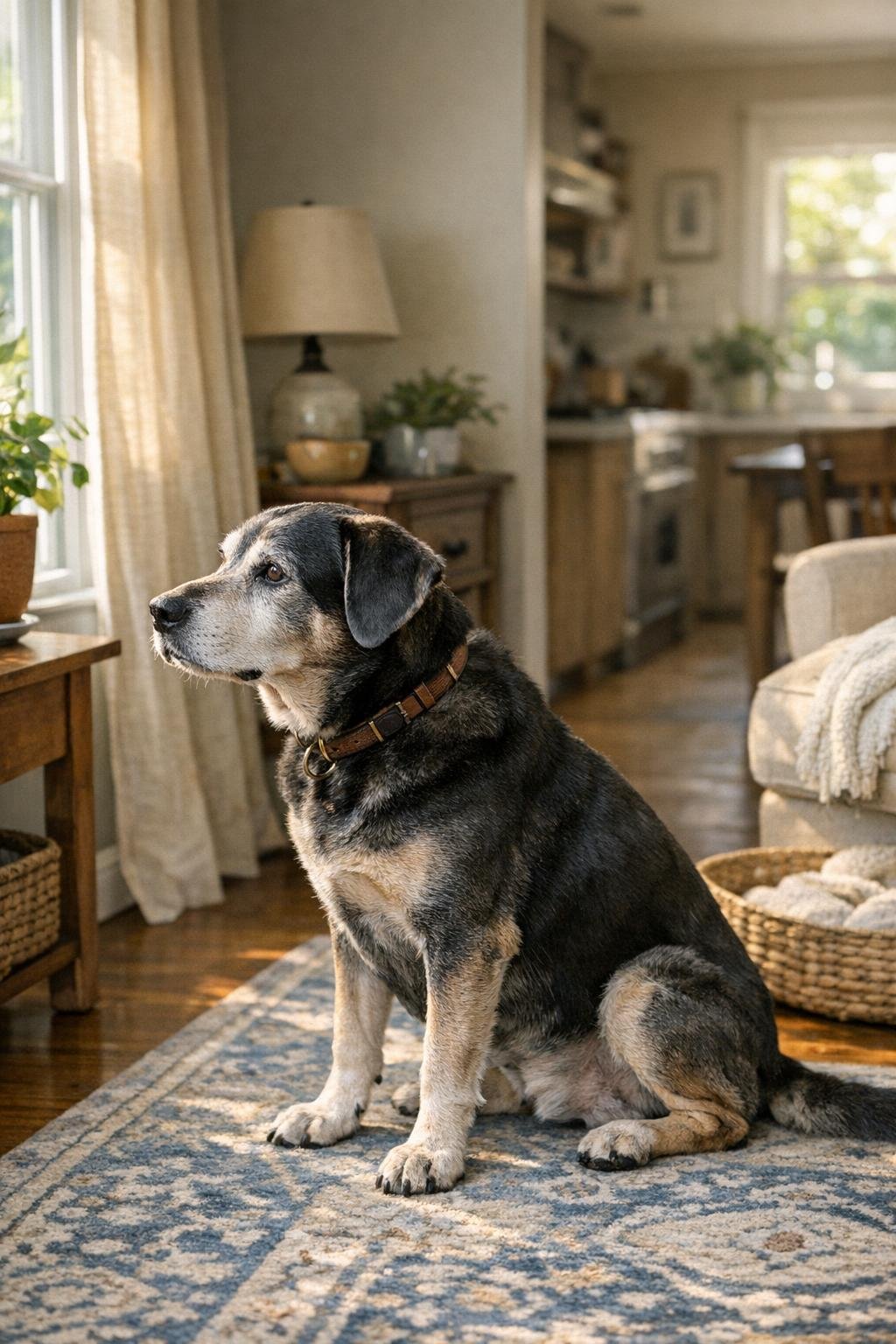
8. He wants closeness without being handled
One of the sweetest and most misunderstood reasons is that your dog may want to be near you, just not fussed over in that moment. Older dogs especially can become more particular about touch. They still seek companionship, but they may prefer to sit beside your legs, back toward you, where they can enjoy your presence without the expectation of petting, brushing, or being asked to move.
I think of this as the canine version of sharing a room in comfortable silence. If your dog stays within 1 to 3 feet, sighs, settles, or leans lightly against the couch, he’s probably choosing connection on his own terms. That’s worth respecting. And if he suddenly stops enjoying touch he once welcomed, I’d keep an eye on it and mention it to your veterinarian at the next visit.
Most of the time, a dog sitting facing away is a small piece of body language, not a personal slight. If your dog seems relaxed, mobile, and otherwise like himself, it’s often just his way of being comfortable; if the posture is new and paired with stiffness, confusion, or touch sensitivity, it’s worth a closer look.