
 Dogs
Dogs Cats
Cats Birds
Birds Horses
 On the Land
 In the Sea
In a small town like mine, everybody notices when a new dog arrives on the block. This time, it was my neighbor’s shelter pup, introduced as a “Golden Retriever mix,” which sounded straightforward enough until I saw him waddling down the sidewalk with that unmistakably low-to-the-ground silhouette. From the front, I would have bet good money on Golden Retriever: soft golden coat, kind eyes, broad face, and that sweet, eager expression that makes you want to reach for a biscuit before you’ve even said hello.
But then he turned sideways, and I just about laughed out loud in the nicest possible way. This little fellow had the long body, short legs, and gentle droopy look of a completely different breed mixed into that golden package. If you’ve ever played the “what breeds are in this dog?” game at the park, this one is especially fun, and I think the answer says a lot about his looks, movement, temperament, and the kind of family he’ll fit right into. See for yourself:
Here he is:
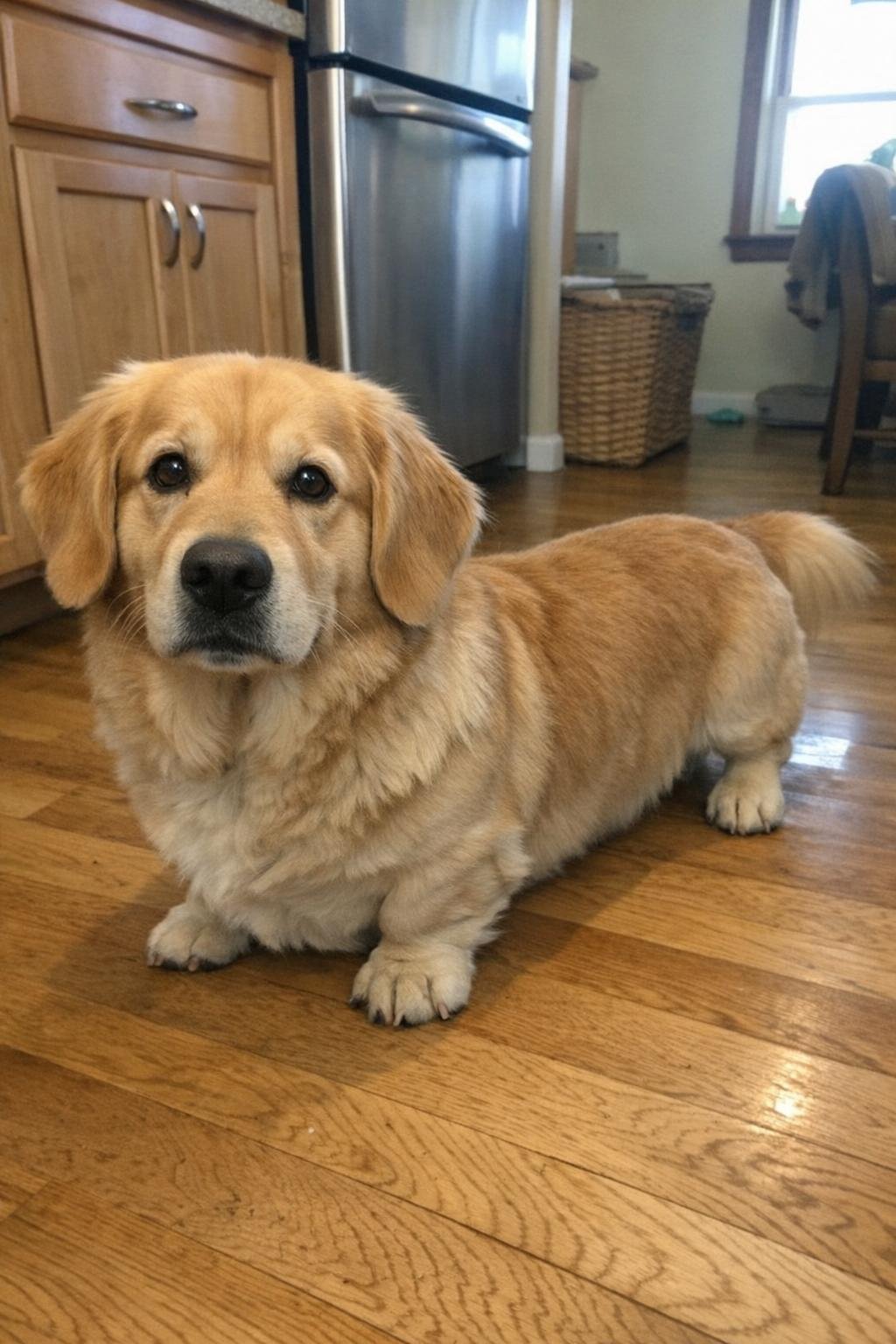
1. My guess: Basset Hound is the other half
If I had to make the call just from appearance, I’d say this pup is very likely a Golden Retriever and Basset Hound mix. People sometimes call that combination a “Golden Basset,” and once you know to look for it, the clues are pretty hard to miss. The head, coat color, and friendly expression lean strongly Golden, while the body shape looks classic Basset: long through the torso, low to the floor, with noticeably shorter legs than a retriever would have.
Shelter labels are often educated guesses, especially when no parent dogs are known. Staff may identify the most obvious breed first, and in this case I can absolutely see why “Golden Retriever mix” made it onto the paperwork. But the second half looks less like a mystery and more like a Basset-shaped exclamation point.
2. The body shape gives it away first
The biggest giveaway is proportions. A typical Golden Retriever stands roughly 21 to 24 inches tall at the shoulder, while a Basset Hound is much lower, usually no taller than about 14 inches. A mix can land somewhere in between, but when you see a dog with a full-sized retriever-style head attached to a body that rides low, your eyes go straight to Basset.
This kind of dog often has a longer back, a deeper chest, and legs that look almost half the length you’d expect on a Golden-type frame. That changes not just the look, but the way the dog moves. Instead of the long, sweeping stride of a retriever, you often get more of a deliberate, rolling trot. It’s adorable, and frankly unforgettable.
3. The head and coat say Golden Retriever
Now let’s talk about the softer features, because they matter too. Golden Retrievers tend to have broad skulls, medium-length muzzles, gentle almond-shaped eyes, and those famously warm, people-loving expressions. If this pup has feathering around the ears, neck, chest, or tail, that also points back toward Golden influence, even if the coat is a little shorter or denser than a purebred’s.
Color can be a clue as well. Goldens usually range from pale cream to rich honey gold. Bassets come in several color patterns, including tricolor and lemon-and-white, but when the coat comes through mostly golden, it’s easy to see why the retriever side gets top billing. In mixed dogs, the face often tells one story while the body tells another, and that seems to be exactly what’s happening here.
4. Those short legs are more than a cute quirk
Basset Hounds are one of several breeds with a dwarfism trait called chondrodysplasia, which is what gives them their signature short, sturdy legs. In a mix, that trait can show up clearly or only mildly. When it shows up strongly, you get that charming “big dog shrunk down low” appearance that makes people do a double take.
It is cute, yes, but it also means families need to think practically. Dogs with longer backs and shorter legs may do better with ramps for couches or porches, fewer repeated jumps in and out of high vehicles, and weight kept in a healthy range. Even 5 extra pounds can put noticeable strain on a low-built dog’s joints and spine.
5. The ears and expression can point to Basset too
Basset Hounds are known for long, velvety ears and soulful, slightly droopy eyes. In a mix, those features may soften rather than appear in full force. You might see ears that are longer than a Golden’s but not floor-sweeping, or lower-set eyes that add that famously wistful Basset look.
That combination can be downright irresistible. One minute the dog looks ready to fetch a tennis ball for an hour, and the next minute he looks like he’s contemplating the meaning of life next to the dishwasher. Around my house, that would earn at least three extra head pats and probably a hand-delivered carrot stick from one of the kids.
6. Temperament: sweet meets stubborn
If this really is a Golden Retriever-Basset Hound mix, the personality can be a lovely blend. Goldens are typically eager, social, and trainable. Bassets are affectionate and funny, but they can also be independent in that hound way that says, “I heard you; I’m just considering my options.” Put them together and you often get a dog that adores people but may not always rush to obey on the first ask.
For families, that can still be a wonderful match. These dogs are often gentle, patient, and companionable. I would just go into training with realistic expectations: use soft praise, small treats, and short sessions of 5 to 10 minutes rather than drilling commands for half an hour. A dog with Basset influence may lose interest long before you do, especially if a fascinating kitchen smell drifts by.
7. Exercise needs may land in the middle
One reason I like this mix for many households is that the energy level can be more moderate than a full Golden Retriever’s. A young Golden may want 60 to 90 minutes of activity a day, sometimes more. A Basset often enjoys exercise too, but usually at a slower pace. A mix may be happy with two 20- to 30-minute walks, plus 15 minutes of fetch, sniff games, or backyard wandering.
The trick is to match the exercise to the build. Long hikes over rocky trails and repeated jumping after balls might not be ideal for a short-legged, long-backed dog. Sniff walks, puzzle feeders, hide-and-seek with treats, and gentle neighborhood strolls can be just right. If I were planning the week for this pup, I’d aim for consistency over intensity.
8. Food matters a lot with a low-built dog
Because Basset-type bodies can be prone to carrying extra weight, portion control is important. A mix like this might weigh anywhere from 35 to 60 pounds depending on size, bone structure, and which parent he takes after most. That means one dog may thrive on 2 cups of kibble a day, while another needs closer to 3 or 3 1/2 cups split into two meals. The right amount depends on the food’s calorie density and the dog’s activity level.
I always tell fellow pet parents to use a measuring cup, not a coffee mug or “about this much” scoop. Treats add up fast too. If training is happening daily, break treats into pea-sized bits or use part of the dog’s regular kibble ration. For a dog with a Basset build, staying trim isn’t just cosmetic; it can make daily movement easier and reduce stress on elbows, shoulders, hips, and back.
9. Grooming is usually manageable, but not zero
Golden Retrievers shed. Basset Hounds shed too. So even if this mix has a shorter or less feathery coat than a pure Golden, I would still expect regular brushing. Two or three times a week with a slicker brush or rubber grooming mitt can help keep loose fur under control, and during seasonal shedding you may want a quick 10-minute brush every day.
Ears deserve extra attention if they take after the Basset side. Floppy ears can trap moisture, especially after baths or damp weather, so a weekly ear check is smart. Nails may also need trimming every 3 to 4 weeks if the dog’s shorter stride doesn’t wear them down naturally. In my experience, keeping up with the little grooming jobs is much easier than trying to fix a month of neglect all at once.
10. Health clues that fit the mix
No one can predict everything from looks alone, but certain breed tendencies are worth keeping in mind. Goldens can be prone to skin issues, ear infections, and joint concerns like hip or elbow dysplasia. Bassets may deal with ear trouble, weight gain, joint stress, and back strain because of their structure. A mix won’t necessarily have these problems, but the family should be aware and proactive.
That means annual vet visits at minimum, keeping body condition lean, using a supportive bed, and asking about joint-safe exercise if the dog shows stiffness. If I had this dog in my own home, I’d also watch for signs like reluctance to climb stairs, difficulty jumping, or frequent ear scratching. Catching issues early can save money and discomfort down the road.
11. Why shelter labels are often only half the story
I have such a soft spot for shelter dogs, and one thing I’ve learned over the years is that labels are often based on quick visual assessment. Staff may have 30 dogs to process, no parent information, and only a few minutes to note likely breed traits. That means “Golden Retriever mix” might reflect the most adoptable-looking or most obvious part of the dog, not the complete picture.
And honestly, that’s fine as long as adopters stay open-minded. In real life, mixed-breed dogs are full of surprises. The family may bring home a “retriever mix” and discover they’ve also adopted a scent hound, a comedian, a couch-wedge specialist, and a world-class crumb patrol officer. That’s part of the fun.
12. A DNA test could confirm it, but daily life already gives clues
If the neighbors are curious, a canine DNA test could offer a clearer answer in 2 to 6 weeks depending on the brand. Most of the popular tests use a cheek swab and cost roughly $75 to $150. They can be especially interesting when a dog’s appearance seems split right down the middle, like this one.
Still, you can learn a lot just by watching the dog over a month. Does he love carrying things gently in his mouth like a retriever? Does he follow his nose across the yard like a hound? Does he prefer a brisk game of fetch or a slow inspection of every bush on the block? Breed shows up in behavior too, and that’s often more useful than a label on paper.
13. What kind of home suits this mix best
I think a Golden-Basset type dog could be a wonderful fit for a family home, especially one with a steady routine. These dogs often do well with people around them, a fenced yard or safe walking route, and owners who enjoy companionship more than high-speed athleticism. They can be great with older children who understand gentle handling and know not to encourage rough jumping on or off furniture.
For picky pet households, meaning homes where everyone has a different idea of the perfect dog, this mix can be a happy compromise. You get some of the sweetness and sociability of a Golden, with a lower-to-the-ground, slower-moving package that may feel easier for some families to manage. As always, temperament depends on the individual dog, but the blend has a lot going for it.
14. My final vote on the mystery mix
So what do I think the other half is? Basset Hound, and I’d put that answer down with a pretty confident hand. The long body, short legs, and overall low-slung shape fit too neatly to ignore, especially paired with a Golden-looking head and coat.
Whatever the exact percentages turn out to be, this is the kind of shelter dog people fall for fast: familiar in one way, surprising in another, and overflowing with charm. Around here, the new kid would be welcomed with a fresh water bowl, a soft rug by the back door, and probably more neighborhood compliments than he knows what to do with.