
 Dogs
Dogs Cats
Cats Birds
Birds Horses
 On the Land
 In the Sea
If you’ve ever woken up with a warm paw pressed against your ankle or a furry back tucked right into your ribs, you are in very good company. I’ve shared my home with enough dogs over the years to know that some of them could have a whole king-size bed and still choose the last 6 inches right next to you. To us, it can seem clingy or a little puzzling, but to a dog, that tiny point of contact can mean all sorts of important things.
For devoted dog owners, especially those of us who have spent years reading every sigh and tail thump, this habit is worth understanding. Here are 9 surprising reasons your dog always wants to be touching you when they sleep, from old pack instincts to simple comfort, and a few tender truths that make those crowded nights feel even sweeter.
1. Touch helps them feel safe
When a dog falls asleep, they are at their most vulnerable. In the wild, sleeping close to trusted pack members offered protection, and that instinct still lives on in the family dog curled up on your quilt. Even a light touch—a paw on your calf or their shoulder against your hip—can reassure them that their safest person is within 2 or 3 inches.
I’ve noticed this most with dogs who were shy by nature or came to us after a rough start. During storms, fireworks, or even a house full of company, they often press in closer at bedtime. That little bit of contact seems to say, “If you’re here, I can rest.”
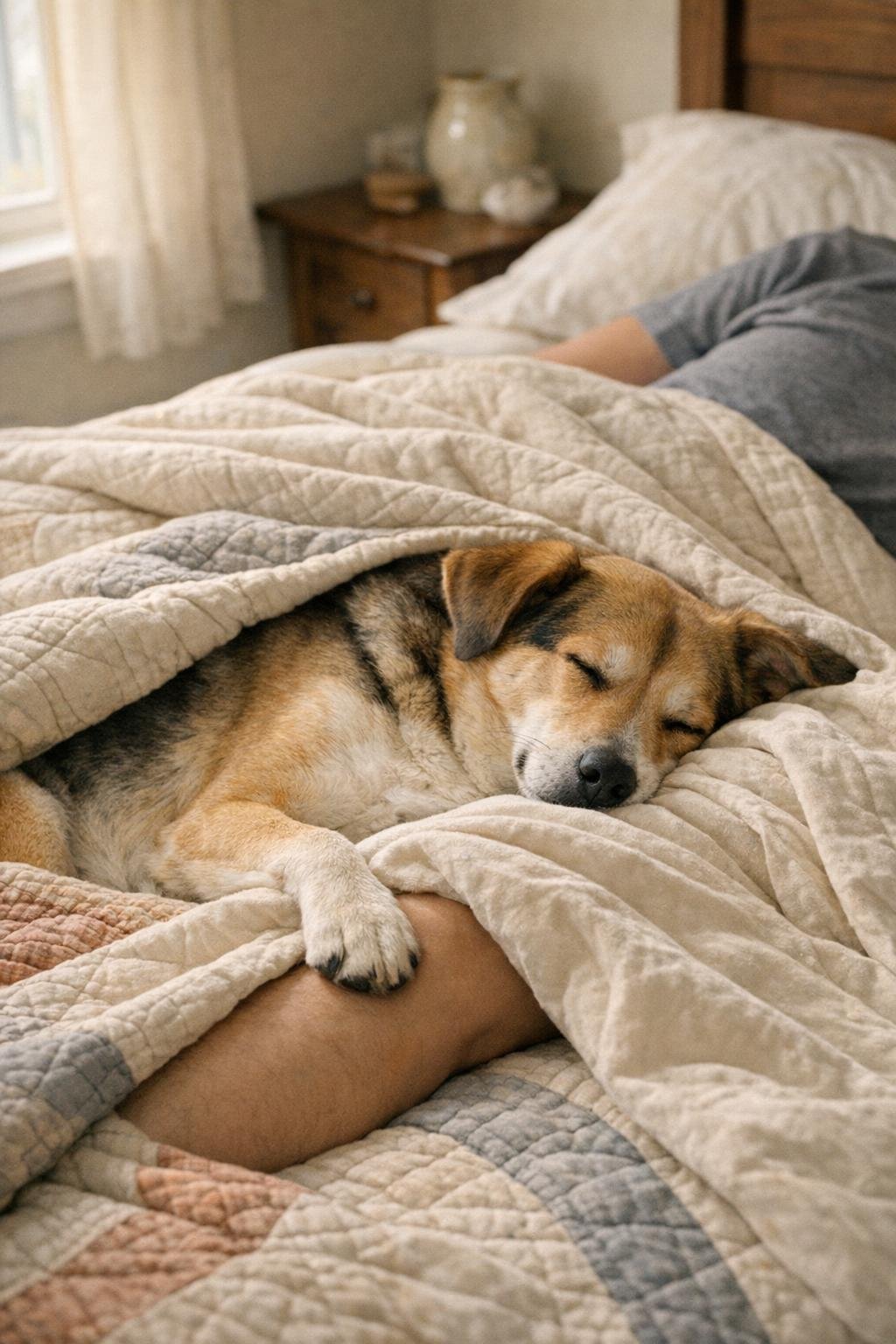
2. Your body heat is better than any dog bed
Dogs are practical creatures, and a sleeping human is basically a large, steady heating pad. Your body gives off warmth all night long, and many dogs naturally gravitate to that, especially small breeds, thin-coated dogs, and seniors with a little stiffness in their joints. A Chihuahua, beagle, or older mixed breed can lose heat much faster than a thick-coated farm dog.
In winter, when the bedroom drops to 64 or 66 degrees, that warm spot behind your knees or against your feet can be the coziest place in the house. I’ve had old dogs who would circle three times in a plush bed and then abandon it entirely for the warmer patch tucked beside me.
3. They’re bonding even while asleep
Dogs don’t stop being social just because they’ve nodded off. Physical closeness is one of the ways they strengthen attachment, much the same way they follow you from room to room or lean against your leg while you stand at the kitchen counter. Sleeping in contact is one more quiet ritual that reinforces, night after night, that you belong together.
That’s especially true in homes where routines are steady. If your dog climbs into bed at 9:30, settles against your side, and stays there until dawn, that pattern becomes part of your shared life. In a dog’s mind, touch and togetherness are woven into the same blanket.
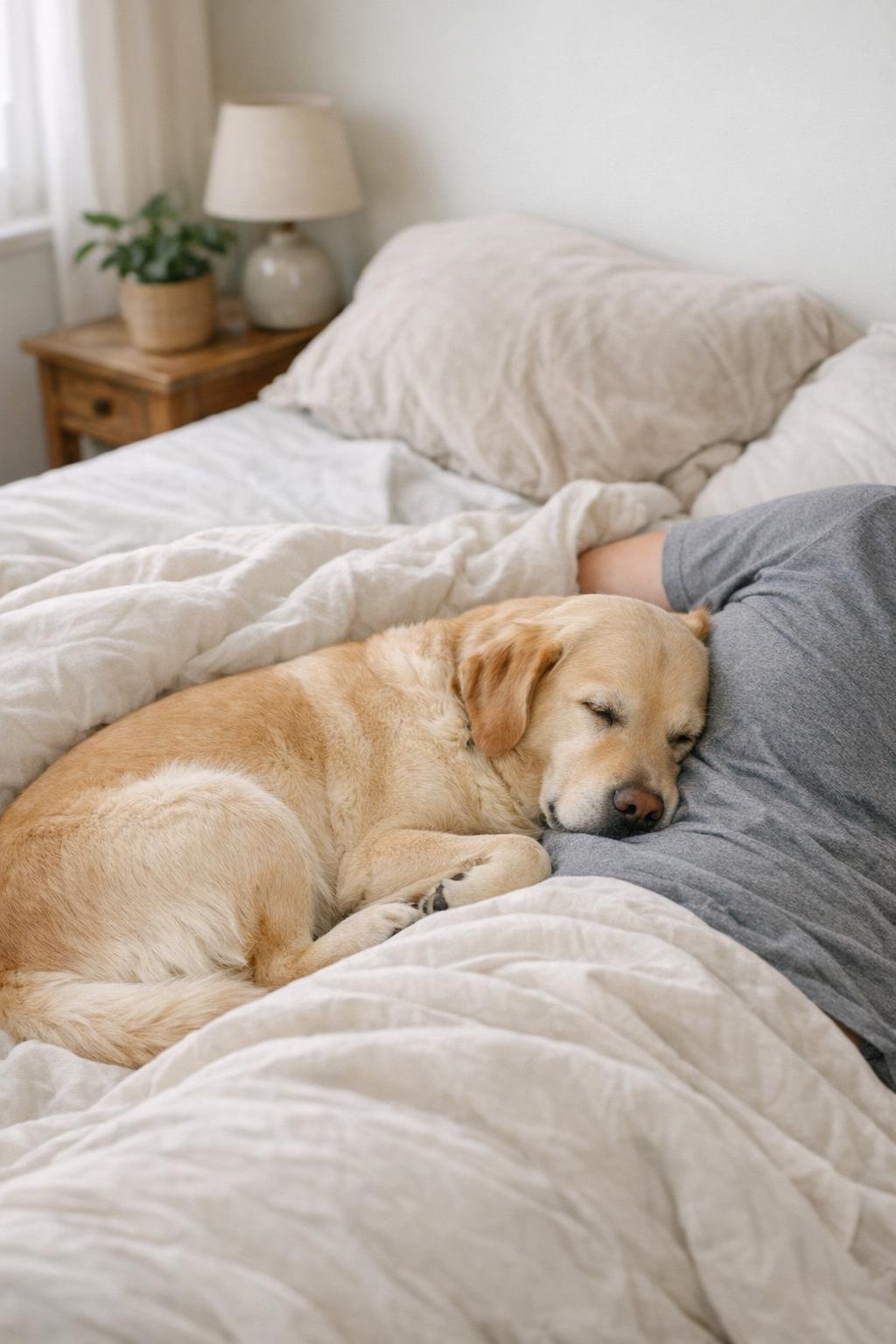
4. They may be guarding you in their own sleepy way
Some dogs sleep touching you because they want to keep tabs on their person. It’s not always dramatic watchdog behavior. Often it’s as simple as staying close enough to notice when you shift, get up, or react to a noise in the night. Contact helps them monitor what matters most to them—you.
I’ve seen this in loyal old shepherd mixes and even in little terriers who took their job seriously. They may snooze deeply for an hour, but if you move a foot or sit up at 2 a.m., they are awake in seconds. Sleeping against you gives them a front-row seat to their favorite responsibility.
5. Your scent calms their nervous system
To a dog, scent is powerful in a way we can hardly imagine. Your skin, pajamas, lotion, soap, and even the familiar smell of your sheets can signal home and safety. Resting with their nose tucked against your hand or shoulder lets them breathe in that comforting scent all night long.
This can be especially important for dogs with mild separation anxiety or age-related worry. A dog that paces at bedtime may settle within 5 to 10 minutes once they’re touching you. It isn’t fussiness; it’s their body responding to the smell of the person they trust most.
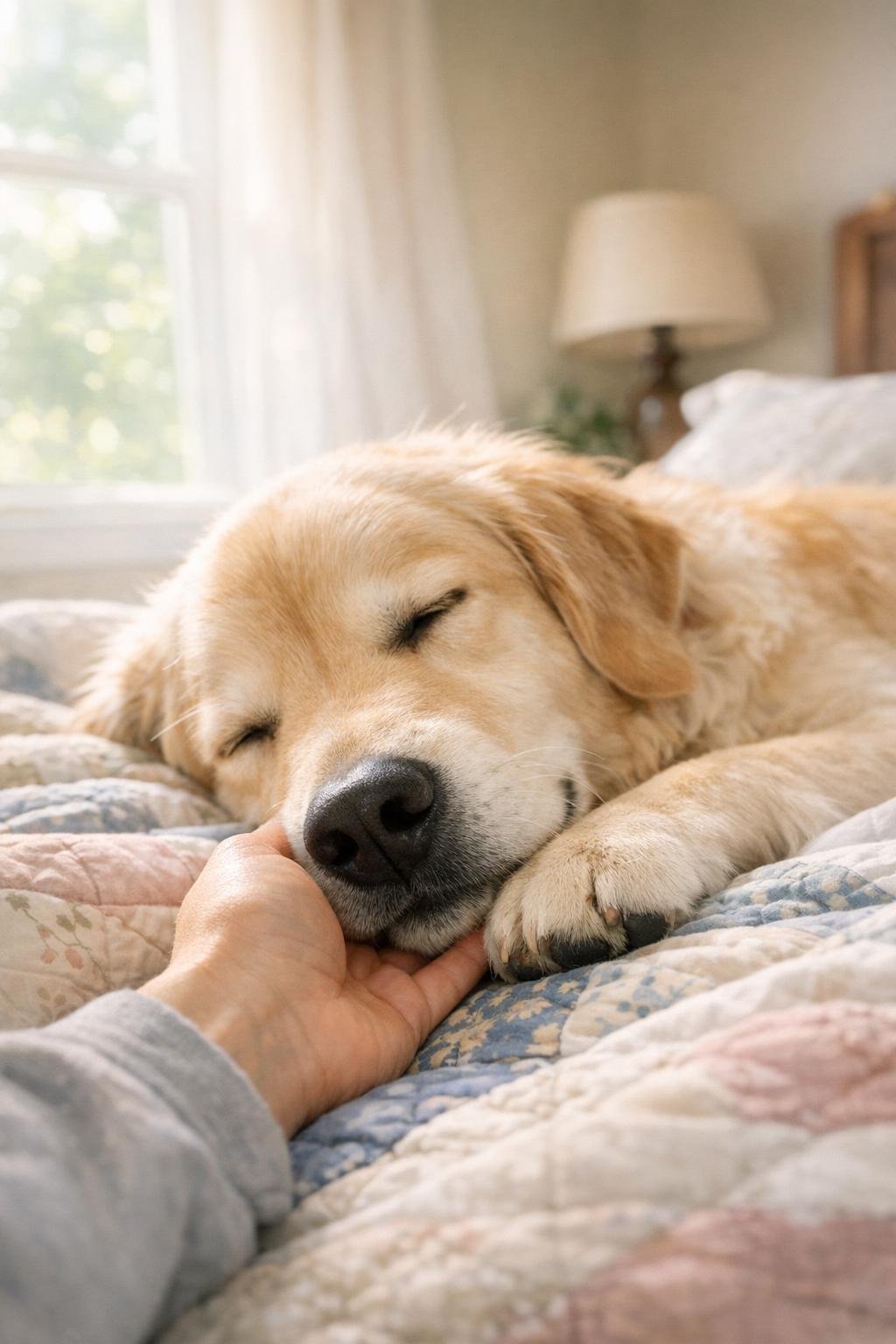
6. It can ease aches and stiffness, especially in older dogs
As dogs age, hard jumps, chilly floors, and stiff joints can make settling down harder than it used to be. Touching you may help them feel physically supported, even if they aren’t actually leaning their full weight on you. A mattress is often softer than the floor, and the steady warmth from your body can be soothing to hips, shoulders, and backs.
I think of old dogs the same way I think of us older folks on damp mornings—we appreciate a warm place to rest our bones. A senior dog with arthritis may choose to press along your thigh or against your feet because that spot feels better for the next 6 or 8 hours than sleeping alone across the room.
7. They’ve learned that closeness gets them better sleep
Dogs are excellent students of habit. If your dog has spent months or years dozing more deeply when they’re touching you, they will keep choosing what works. You may notice they twitch less, change positions less often, and settle more quickly when they sleep right against your side rather than in a separate bed 4 feet away.
Some dogs build a whole bedtime routine around this. They wait until you turn off the lamp, hop up within 30 seconds, circle twice, and wedge themselves into their usual spot. What looks surprising to us may simply be a sleep strategy they’ve practiced hundreds of nights in a row.
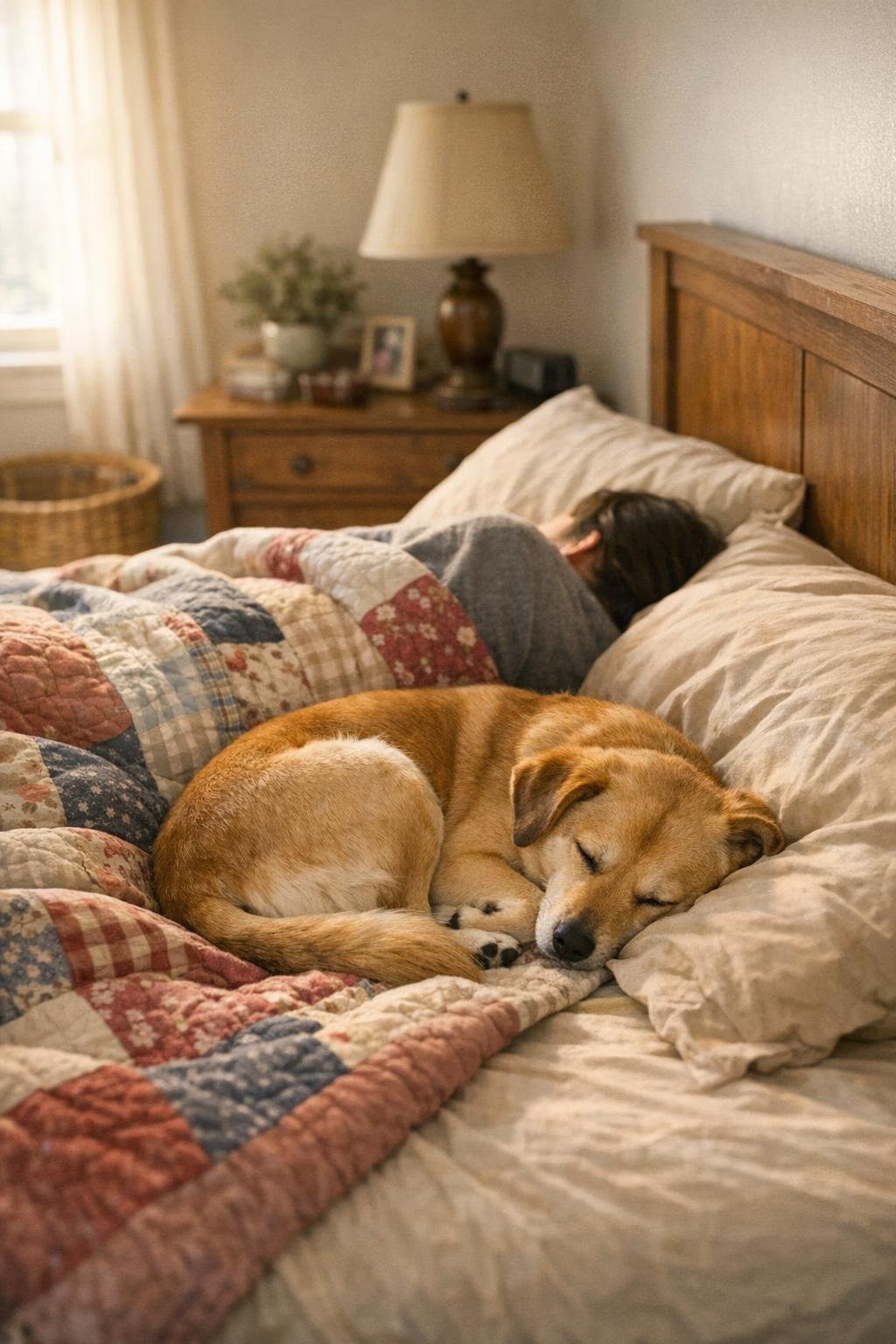
8. They may be responding to changes in you
Dogs are remarkably sensitive to shifts in our bodies and routines. They can notice if you’ve been ill, sad, restless, or moving differently than usual. When that happens, some dogs increase physical contact during sleep, almost as if they are checking in through the night.
I’ve known dogs who became extra clingy after surgery, during grief, or in seasons of stress. They seemed to sense the need before words ever caught up to it. If your dog suddenly starts sleeping pressed against you after years of keeping a little space, it may be their quiet way of offering comfort while also seeking reassurance themselves.
9. Sometimes it’s simply love, plain and true
Not every behavior needs a complicated explanation. Many dogs touch us when they sleep because we are their favorite place in the world. Out of every couch, rug, dog bed, and sunny patch on the floor, they pick the spot where they can feel our heartbeat, our warmth, and our presence.
After all these years, I think that may be the sweetest answer of all. A dog’s love is wonderfully uncomplicated. If yours insists on sleeping with their back against yours or their chin on your ankle night after night, it may just be their way of saying they are happiest when they’re close.
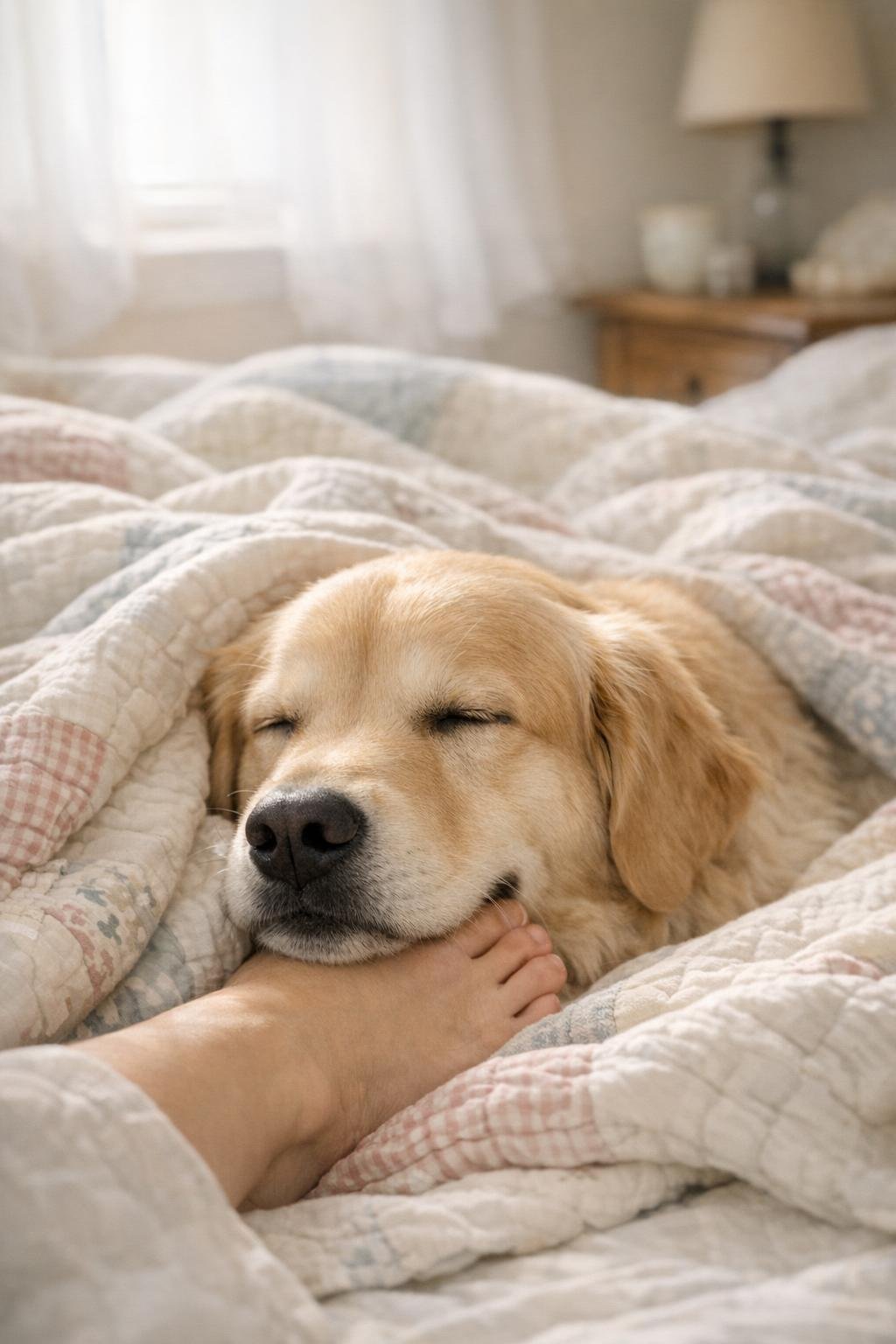
If your dog sleeps touching you, chances are you’re not dealing with a bad habit so much as a deep instinct wrapped up in trust, comfort, and devotion. It may leave you with less blanket and a little less room, but it’s also one of the tender privileges of loving a dog.